
Getting Around Puglia: Airports, the Two Coasts, and When to Come
Which airport, which coast, and which month. The practical logic behind a Puglian trip, so you spend your time at the masseria instead of in the car.
Puglia has two airports, and which you choose quietly shapes the trip. Brindisi (BDS), in the middle of the heel, is the one to aim for: it's about twenty minutes from Ostuni, forty from the Savelletri masserie, and well under an hour from Lecce and the Salento — closest to most of the hotels in this guide. Bari (BRI), an hour or so north, is the bigger airport and the better-connected one internationally, and it makes sense if you're starting in the north of the region or stitching Puglia onto somewhere else. Either way, the next sentence is the important one.
You will want a car. There's no graceful way around it: the masserie sit down farm tracks the trains don't reach, and in any case the driving is the pleasure here — the dry-stone walls, the olive groves gone silver in the wind, the white towns appearing one after another on their ridges. Rent at the airport, and budget more time than the map suggests, because the back roads are slow and you will keep stopping.
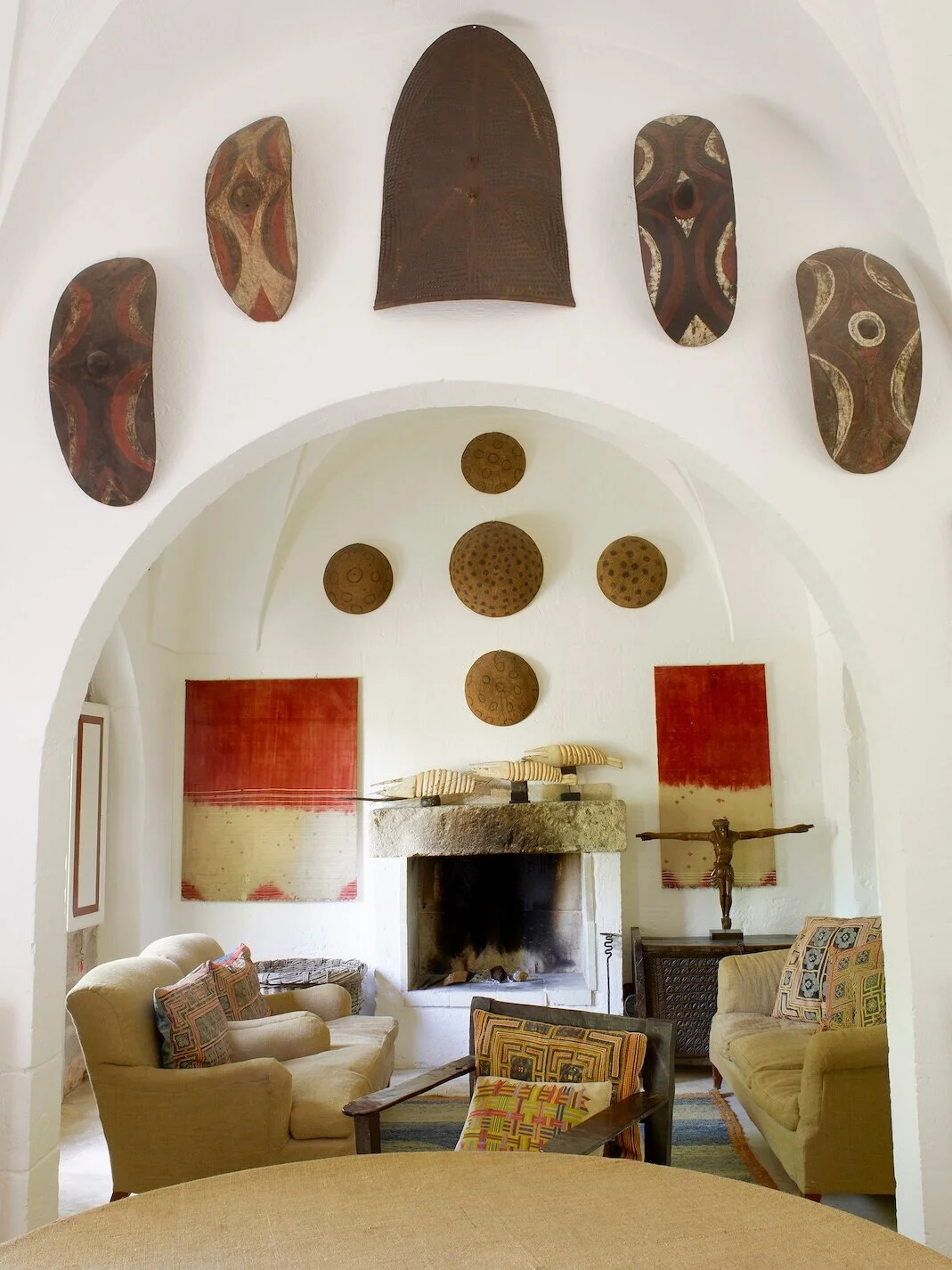
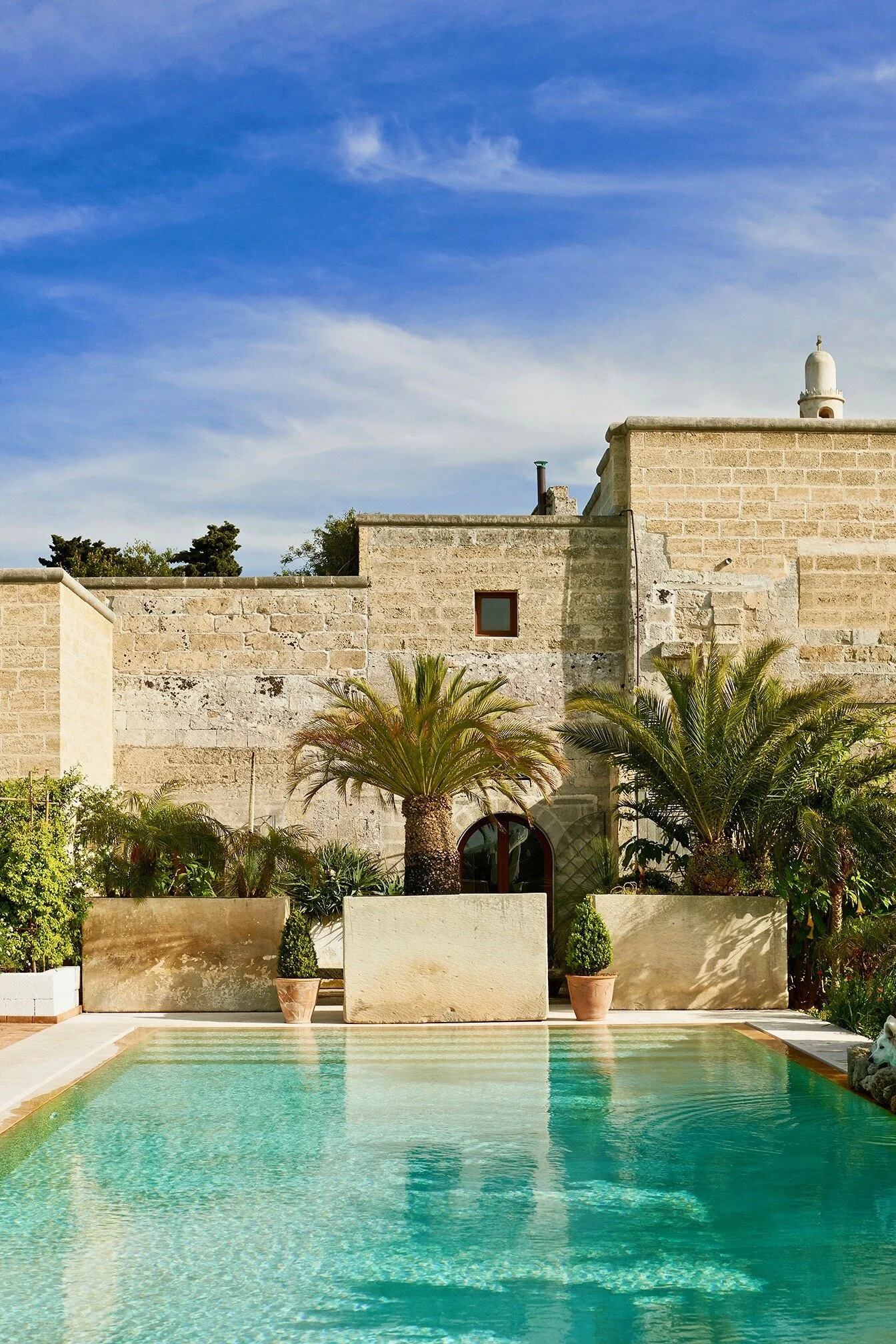 | 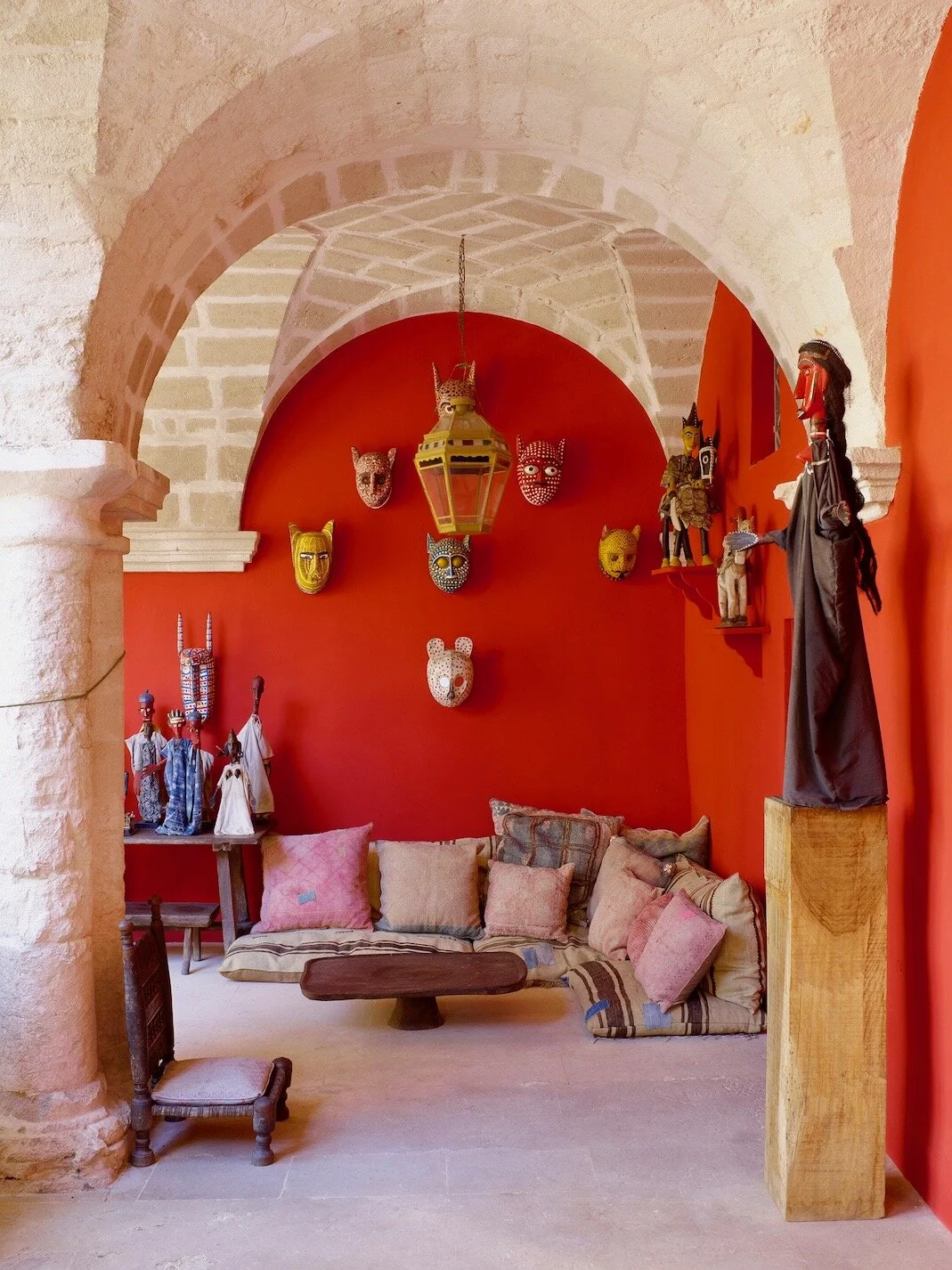 |
The hotels in this guide fall into two clusters, roughly an hour and a half apart. The Valle d'Itria — Ostuni, Savelletri, Fasano, Martina Franca — is the central plateau of trulli and masserie, close to both airports; it's where Moroseta, Torre Maizza, Torre Coccaro, Vista Ostuni, San Michele and Mascienda sit. The Salento — Lecce and everything south of it, down to the land's end at Santa Maria di Leuca — is the deep heel, flatter and hotter, with two coastlines of its own; that's where you’ll find Palazzo Daniele, the Convento, La Fiermontina, Trapanà, Tenuta Negroamaro and Potenti. You can base in one and day-trip the other, but if you have the days, give each its own stay.
Puglia also has two seas, and the locals choose between them by the wind. The Adriatic runs down the east — Savelletri, Polignano, Otranto — with the masseria beach clubs and the clearer mornings. The Ionian curls along the south and west, around Gallipoli, with the long dune beaches and the warmer, calmer water. The rule the Salentini live by: when the tramontana blows cold from the north, go to the Ionian side, which is sheltered; when the sirocco comes up hot off Africa, cross to the Adriatic above Otranto. It sounds like folklore. It's just good advice.

And the month matters more here than almost anywhere. May, June, September and early October are the season — long warm days, the sea swimmable, the towns still themselves; most of the masserie in this guide run from April into November and shutter for the winter. August is the one to avoid: the heat is real, the whole of Italy is on holiday at once, and the Savelletri strip in particular goes bumper to bumper. Come in the shoulder months, take the back roads on purpose, and let the drive be part of the trip rather than the tax on it.
The short version. Fly into Brindisi for almost everything in this guide, Bari if you're coming from the north or far abroad. Rent a car. Pick the Valle d'Itria or the Salento as your base — or split the trip and do both. Follow the wind to the right coast. And come in May, June, September or October, never August.