
Vista Ostuni: The Convent-Turned-Tobacco-Factory Reborn Below the White City
New as a hotel and centuries-deep as a building; a convent, then a shelter for orphaned girls, then a 1920s cigarette factory, restored below the white town with its stone vaults and Grottaglie tiles intact.
Vista Ostuni opened in July 2025 at the foot of the White City, and it has one of the better backstories in Puglia. Before it was a hotel the building was a convent; then a shelter for the town's poor and orphaned girls; then, from the 1920s into the 1960s, a tobacco factory — the Manifattura Tabacchi, where the local leaf was turned into cigarettes. The Passera family, four generations into Italian hotelkeeping, spent more than two years restoring all of that rather than papering over it.
The work was led by the Milan architect Roberto Murgia, who has been with the Vista brand since it began. He kept some six thousand square meters of historic interior — the stone arches, the cross-vaulted ceilings rising as high as seven meters, a cloister now roofed in glass — and had the stone, terracotta, wood and iron reworked by local craftsmen, with custom ceramics from nearby Grottaglie. The gardens running down through the monumental olive groves toward the Adriatic are by the Belgian landscape designer Erik Dhont. The property's own history doesn't claim a century for the building — only that it has stood longer than the records reach.
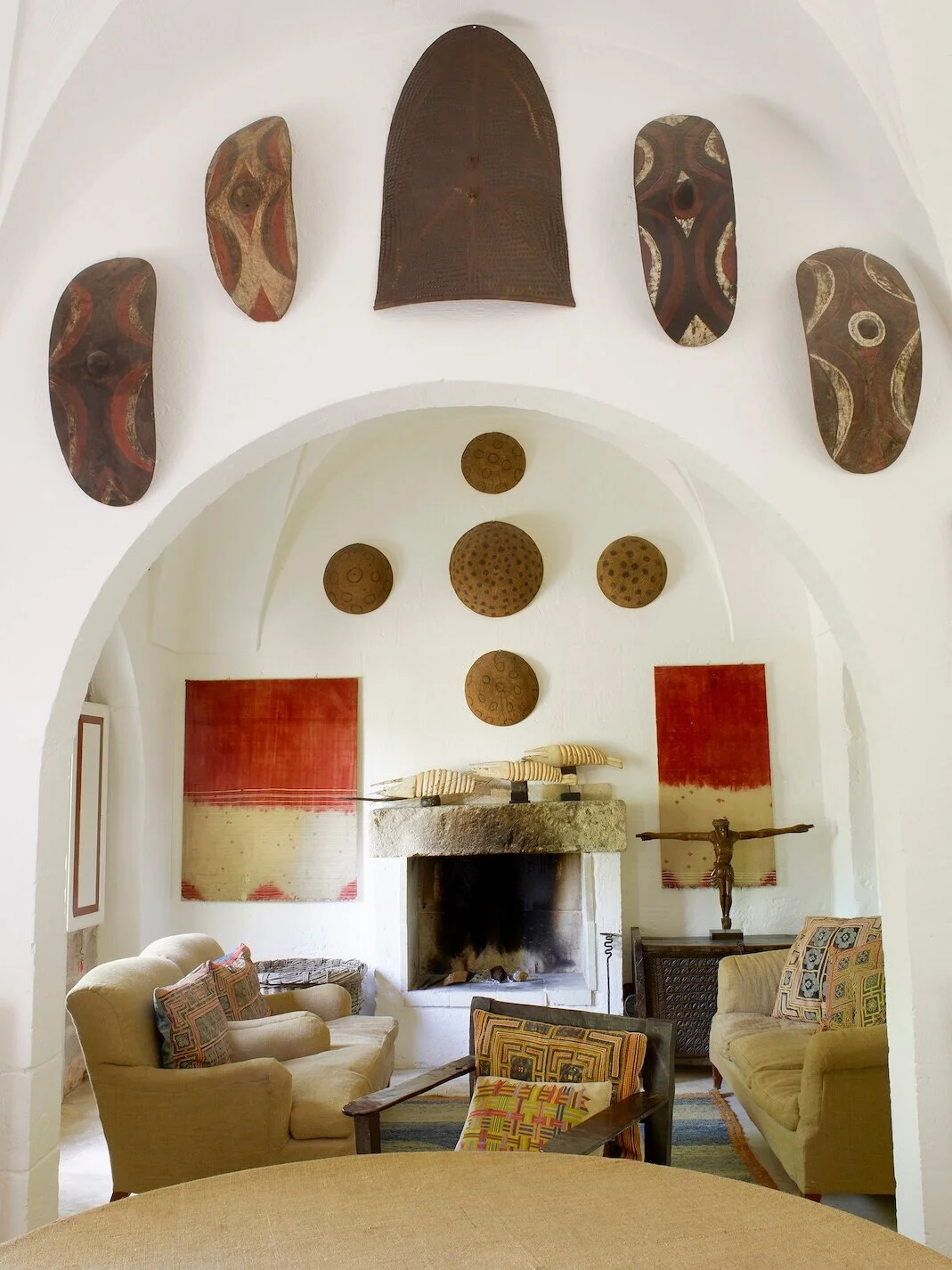
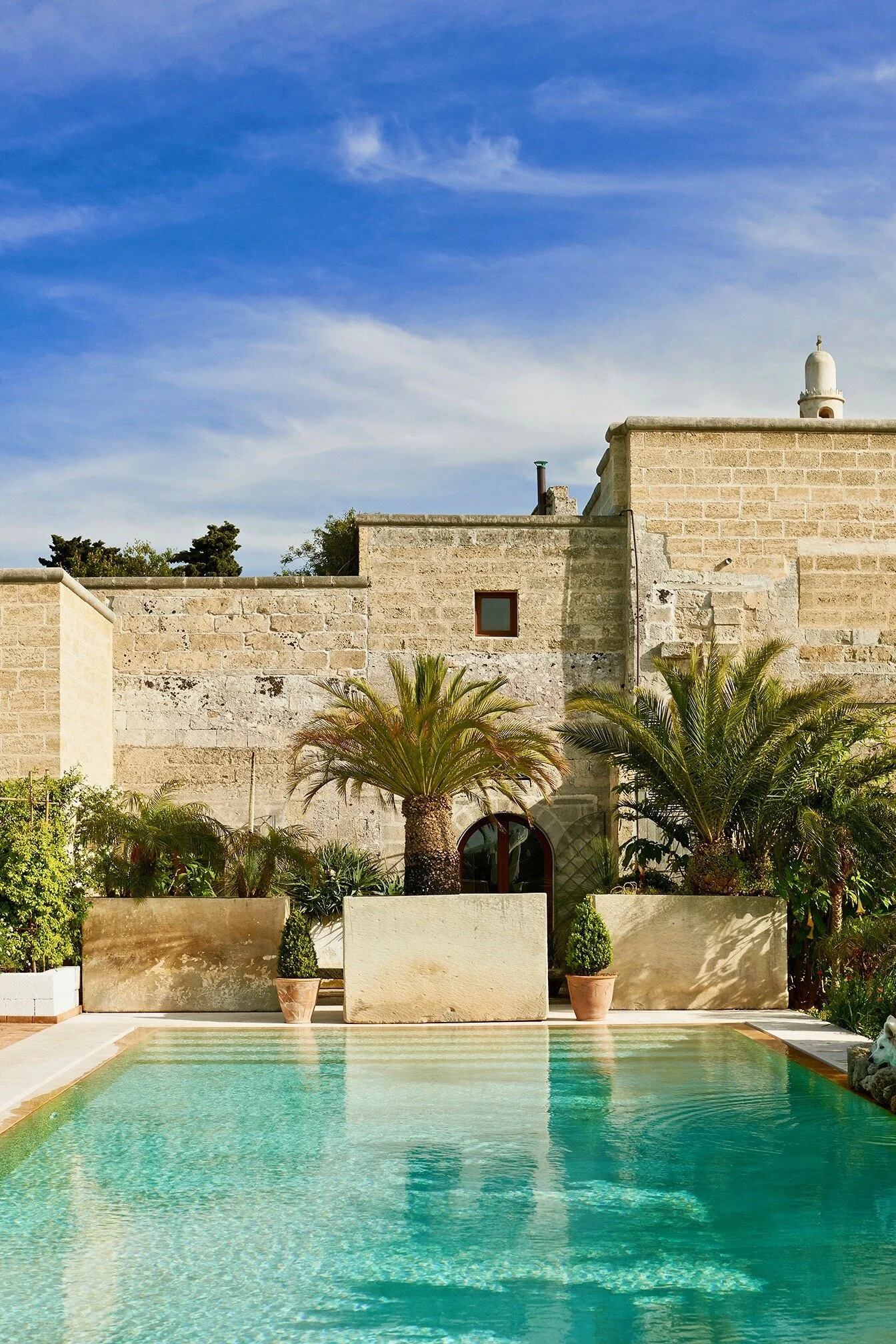 | 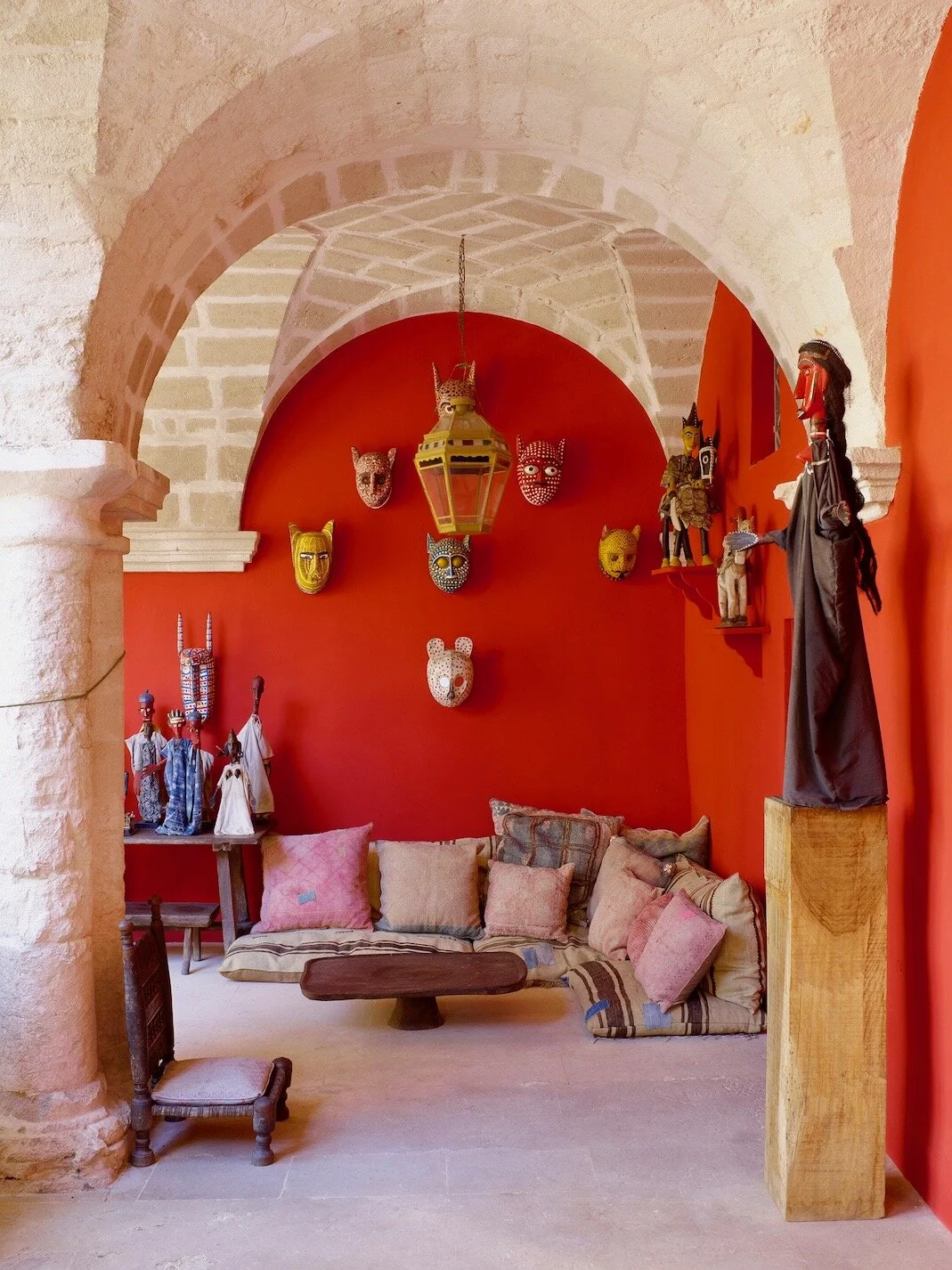 |
Twenty-eight rooms and suites, nineteen of them suites, sit over three floors under those ecclesiastical vaults — some facing the sea, some the white town — with multicolor marble bathrooms and floor plans from 36 to 75 square meters. There are three pools: a heated infinity pool on the roof, a mosaic-tiled one among the olives, and an indoor pool in the cave-like spa, all violet tile and Biologique Recherche.
The fine-dining room, Berton al Vista, carries the name of Andrea Berton — the Friuli-born, Michelin-starred Milan chef — with executive chef Giuseppe Aresta running the kitchen day to day and tasting menus drawn from the groves and the sea. By day there's the Bianca Bistrot beside the garden pool, the Chiostro Bar tucked into the old cloister, and an Infinity Bar on the roof.

It is, to be clear, a new hotel and a polished one, with a brand and a Michelin name behind it — but the polish sits on a genuinely strange old building rather than a manufactured one, which is the harder thing to find in Puglia these days. Ostuni's old town is a ten-minute walk uphill and Brindisi's airport twenty minutes the other way, which makes it an easy first or last night of a trip. Ask for a sea-view suite under the highest vaults, and take your first drink in the cloister bar — a room that has been, in its time, a chapel, a refuge, and a cigarette works.
PROPERTY DNA
Ownership | Independent; a private home that takes a few guests, created by Lord Alistair McAlpine and his wife Athena, who runs it still |
Era & Design | A former Franciscan monastery, roughly 500 years old (14th–15th century); restored by the McAlpines from the early 2000s |
Setting | An unmarked door in a stone wall on the edge of Marittima di Diso, ~2 km from the Adriatic, near the bottom of the Salento |
Rooms | 8 bedrooms — the monks' original cells; sleeps ~15, and can be taken whole |
Designs & Makers | The McAlpines' lived-in collection of folk and tribal art from four continents; in the kitchen, the chef Pierluigi and his mother Cecilia |