
Masseria Torre Maizza: A Rocco Forte Five-Star That Still Reads as a Working Farm
Rocco Forte's most polished Puglia address is also its most rooted; a 16th-century watchtower where the spa is the old olive mill, the bar the old barn, and the thousand-year-old olive trees still go to the press.
Yes, it's a Rocco Forte hotel with a five-star, spa, a nine-hole golf course, and a private beach club down the coast. You don't need us to tell you it's polished. The reason it earns a place here is that, underneath the polish, it never quite stopped being a farm.
The tower came first. In the sixteenth century this was a watchtower, thrown up to scan the Adriatic for Ottoman raiders and shelter the locals when they landed. Around it grew a masseria — a fortified, self-sufficient Apulian farm estate — pressing oil from olive trees that are still rooted in the grounds, some of them a thousand years old and still harvested for the house oil.
 |  |
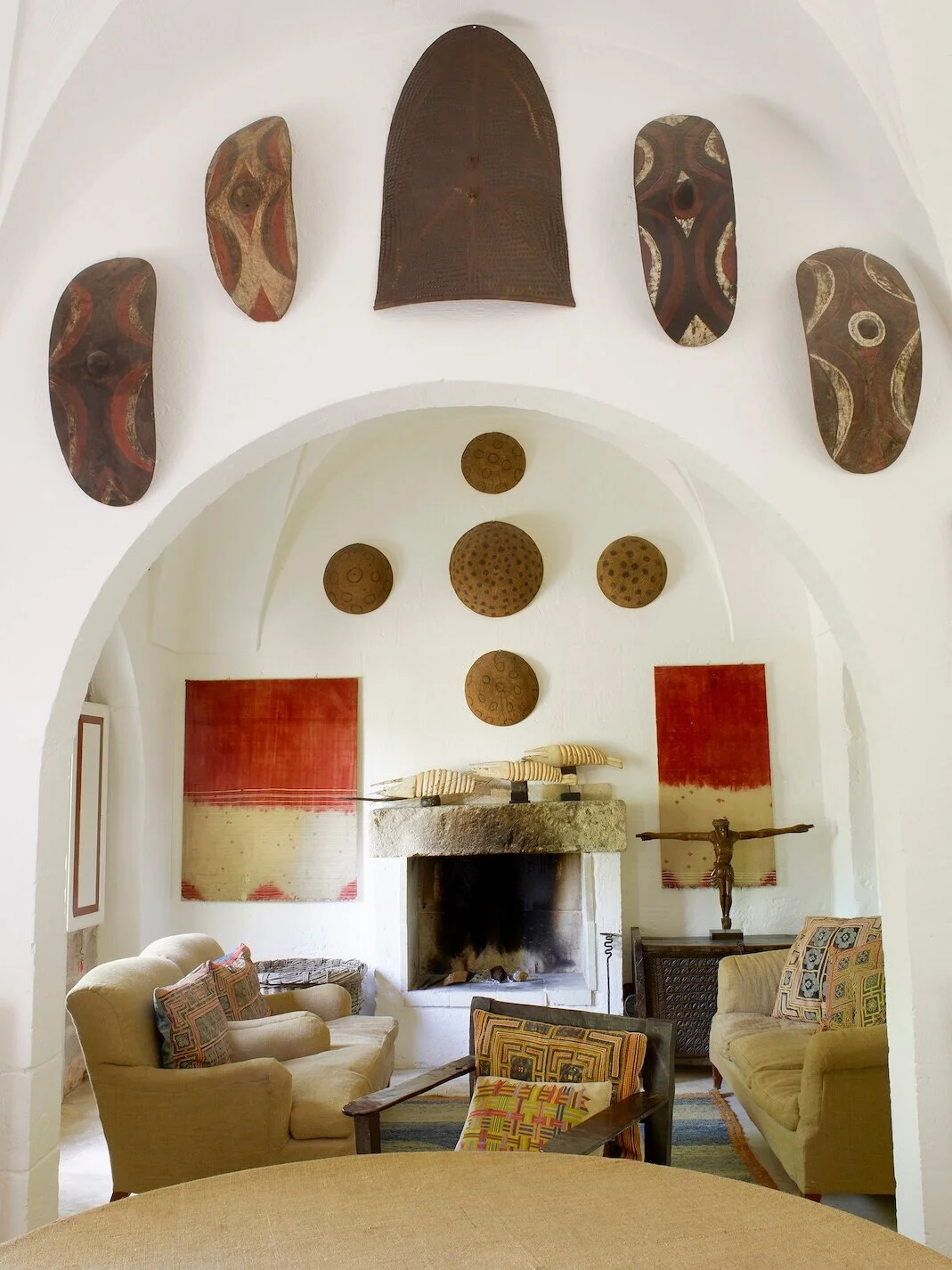
When Rocco Forte took it on in 2018, the interiors went to Olga Polizzi — the group's director of design, and a Forte herself — who restored it by hand and, more to the point, left the farm legible. The spa sits inside the former olive mill; the fireside Bougainvillea bar under the whitewashed arches of the sixteenth-century barn; the Carosello restaurant in what were the stables. The scheme is the traditional white-on-white of the Puglian masseria, with hand-painted ceramics and pieces of the old farm kept where they stood — one person's hand rather than a corporate template, which is the rarer thing to find inside a luxury group.
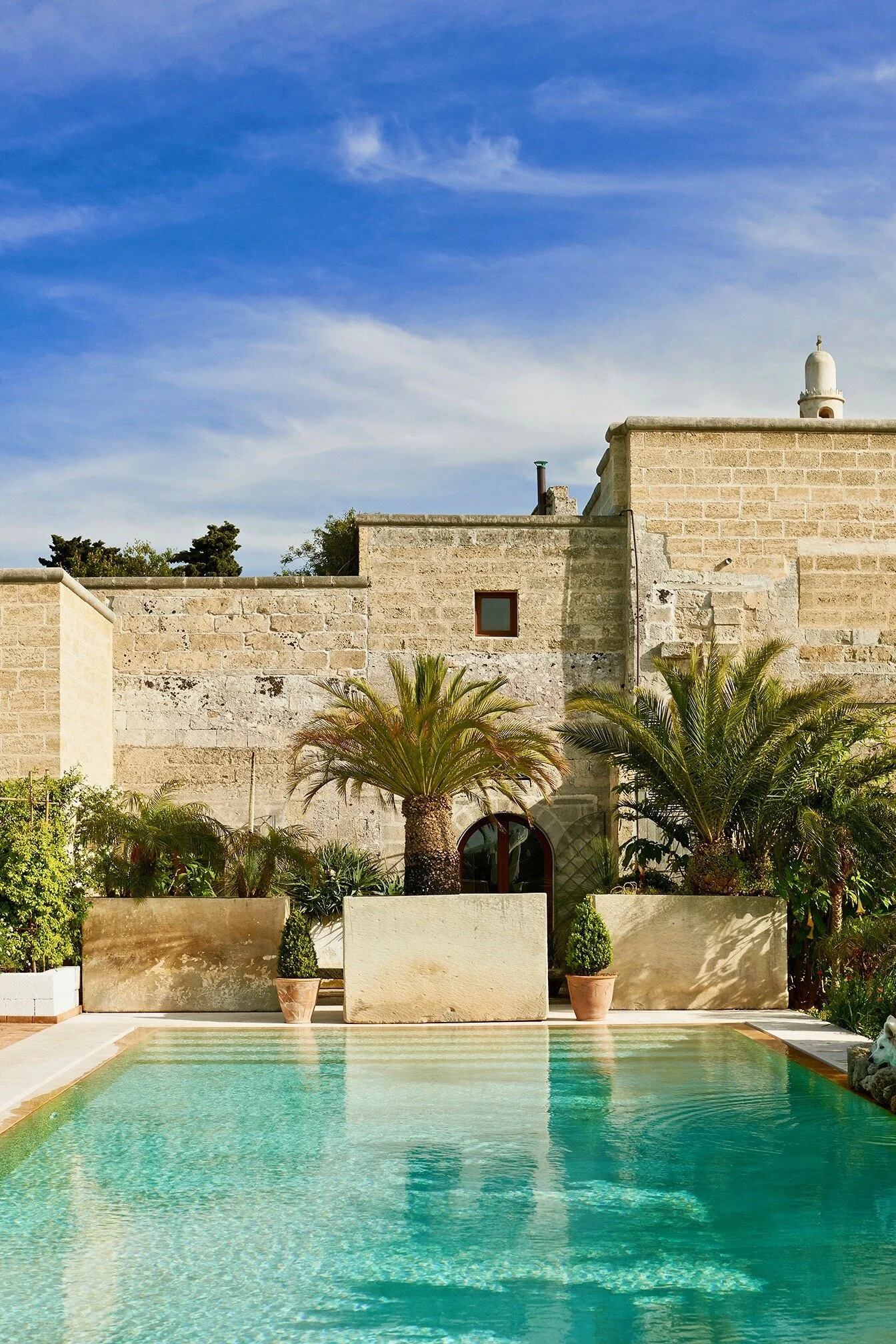
It stays small for a five-star: forty rooms and suites, several under barrel-vaulted ceilings with private plunge pools, which keeps it closer to a large house than a resort. Groups can take Borgo degli Ulivi, a cluster of villas and suites for up to twenty-two behind their own gardens and pools. The main pool is open to the sky between a row of ancient stone columns.

The spa is the Irene Forte, two treatment rooms set into that old mill, with an olive-oil ritual that closes the loop with the grove outside and a line of recovery treatments for guests coming through cancer. At Carosello the kitchen leans on the estate itself — the herbs, the eggplant and zucchini grown on the property, the burrata and orecchiette that belong to this stretch of Puglia.
Savelletri sits on the coast just below the Valle d'Itria, with Ostuni and the trulli of Alberobello each about half an hour inland, and the hotel runs from April into November. Ask for a suite under the old barrel vaults, and walk the olive grove before dinner — the trees were here four centuries before the brand was, and you can taste it in the oil.
PROPERTY DNA
Ownership | Independent; a private home that takes a few guests, created by Lord Alistair McAlpine and his wife Athena, who runs it still |
Era & Design | A former Franciscan monastery, roughly 500 years old (14th–15th century); restored by the McAlpines from the early 2000s |
Setting | An unmarked door in a stone wall on the edge of Marittima di Diso, ~2 km from the Adriatic, near the bottom of the Salento |
Rooms | 8 bedrooms — the monks' original cells; sleeps ~15, and can be taken whole |
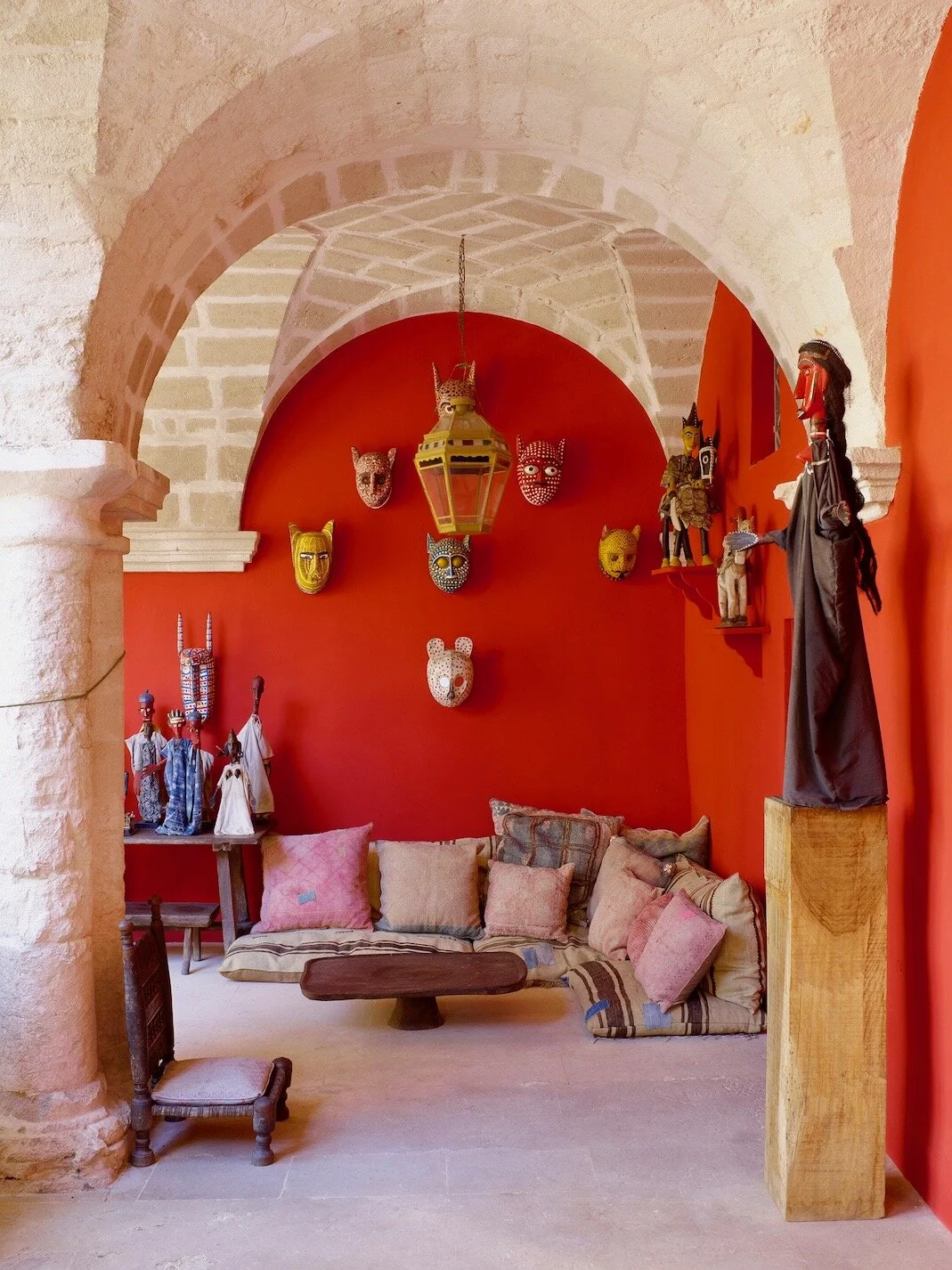
Designs & Makers | The McAlpines' lived-in collection of folk and tribal art from four continents; in the kitchen, the chef Pierluigi and his mother Cecilia |