
The Anti-Chain Guide to the 12 Best Boutique Hotels in Puglia
Twelve owner-driven, design-led, deeply Puglian places to stay; and not a single manufactured masseria-resort among them
Puglia has a problem, and it's the same one that comes for every beautiful place once the world finds it: success turns it generic. The heel of Italy is now studded with masseria-resorts built new to look old. Whitewashed compounds at the end of long private drives, golf courses, spa menus the length of paperbacks, and a sameness you could airlift to any warm coast on earth. Borgo Egnazia is the archetype; you've seen it on a hundred feeds. It's an objective triumph and, to our eye, a small tragedy.
This guide is the argument against that Puglia. Every hotel on it is independent or family-run, owner-occupied or owner-obsessed, and rooted in the specific place it stands. The masseria that still presses its own oil, the palazzo on a working town square, the monastery a collector filled with fourteen tons of books, the farmhouse a Mexican designer refused to scrub white. The luxury here is real but quiet: provenance and porosity, the named cook and the hand-thrown ceramic, not the gloss. We've kept the conglomerate brands and the manufactured resorts out on principle. One or two famous names did make the cut, and we'll be honest about why when we get to them.
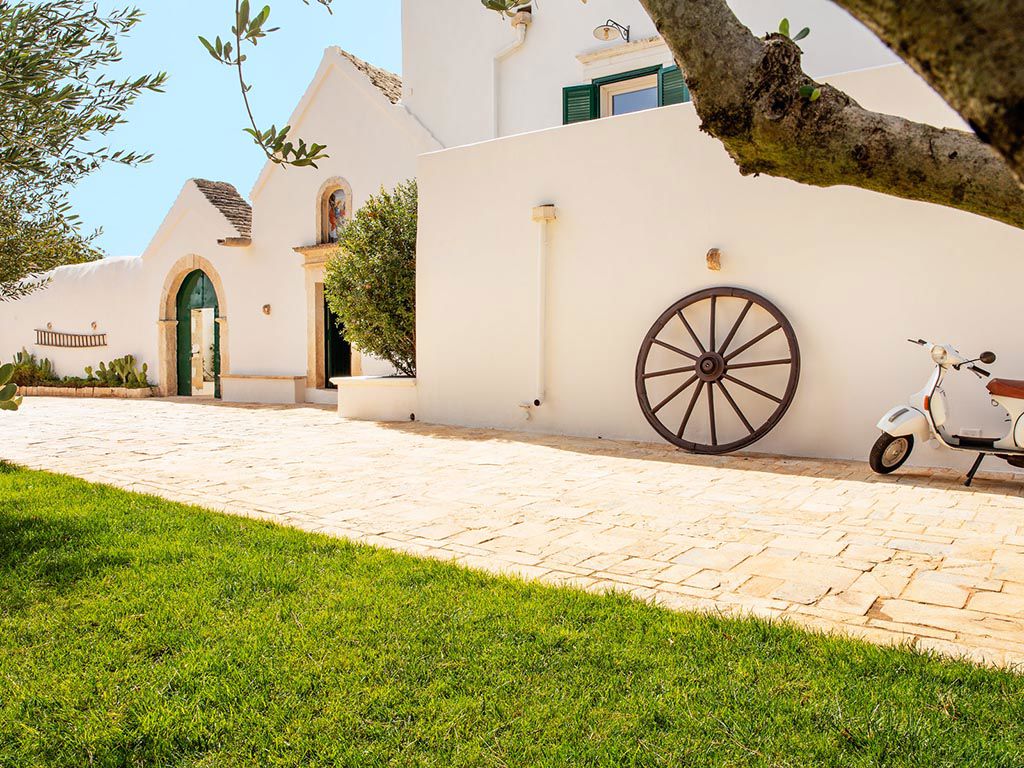 |  |
A word on the ground: Puglia splits into two characters about ninety minutes apart, and we've split this guide the same way. The Valle d'Itria is the central plateau of trulli and olive groves around Ostuni and Savelletri, closest to both airports, and the polished heart of the region. The Salento is the deep, flat, two-sea'd south below Lecce, hotter and we daresay a bit stranger, where the baroque thins out towards a wilder, emptier coast. Fly into Brindisi for almost all of it, rent a car (you'll want one), and come outside high summer — never August. (See: Getting Around Puglia.)
Twelve places follow, six per region, each linking down to a full hotel profile. Supporting double-clicks on the ceramics town of Grottaglie, the region's olive oil, and both valleys are threaded through.
Region 1
Valle d’Itria (6 hotels)
Trulli country: whitewashed masserie in the olive groves, the white city of Ostuni on its hill, and the towns most people drive straight past on the way to Alberobello. (See: The Valle d'Itria, Beyond Alberobello.)
1. Masseria Moroseta
Location: Ostuni

You've seen it: the chalk-white arches against the olive grove that launched a thousand imitations. The part the photos hide is that it isn't old; the architect Andrew Trotter built it from scratch in 2016, his debut, and it became the template for the modern Puglian masseria by understanding the old ones better than most restorations do. Six rooms, a working olive farm, and a single communal table where the Milan-born chef Giorgia Goggi cooks whatever the garden gives her. Yes, it's the obvious one, but six rooms means it never feels like a set.
Property DNA
Ownership | Independent; owner-founder Carlo Lanzini |
Era & design | A new masseria built 2016 in the Pugliese vernacular; debut of architect Andrew Trotter |
Setting | A ridge in five hectares of olive groves, ~3 km outside Ostuni |
Rooms | Six, around a courtyard |
Designers & makers | Studio Andrew Trotter; head chef Giorgia Goggi |
Read the full profile: Masseria Moroseta →
2. Masseria Torre Maizza
Location: Savelletri
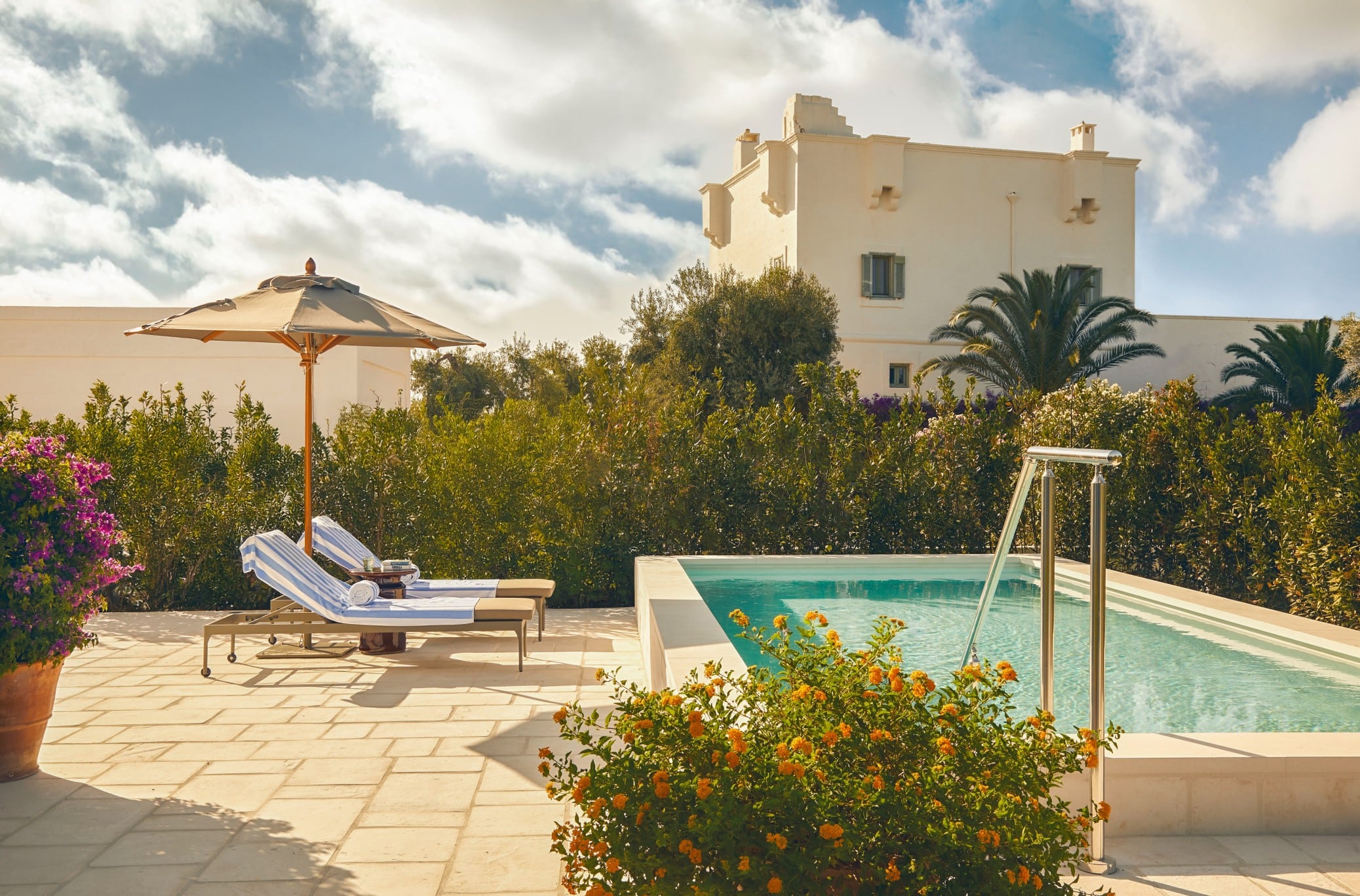
Yes, it's a Rocco Forte, a polished five-star with a spa and a nine-hole course, and you don't need us to tell you it's the safe choice. What earns it a place is that it never stopped being a farm: a 16th-century watchtower where the designer Olga Polizzi put the spa in the old olive mill, the bar in the old barn, the restaurant in the stables, and left the thousand-year-old olives still going to the press. Small for a five-star at forty rooms, and rooted in a way the brand can't manufacture.
Property DNA
Ownership | Rocco Forte Hotels; acquired 2018, restored under Olga Polizzi |
Era & design | A 16th-century watchtower-farm, sensitively restored |
Setting | Savelletri di Fasano, on a working olive estate above the Adriatic |
Rooms | 40, plus the Borgo degli Ulivi villas (up to 22) |
Designers & makers | Olga Polizzi; hand-painted ceramics |
Read the full profile: Masseria Torre Maizza →
3. Masseria Torre Coccaro
Location: Savelletri

Run by the Muolo family, who, between this and Torre Maizza next door, all but wrote the playbook for Puglian luxury. Torre Coccaro is the genuine article: a 16th-century fortified farm lived-in enough to feel like a home rather than a set. The Aveda spa is carved into caves that have held an olive mill since around the year 1000, the chapel dates to 1730, and there are two beach clubs of the masseria's own on the coast below.
Property DNA
Ownership | Family-owned by the Muolo family (also Torre Maizza) |
Era & design | 16th-century fortified masseria; chapel of 1730; caves since ~year 1000 |
Setting | Savelletri, on an estate of 800-year-old olive groves |
Rooms | 39, from cave rooms to pool villas |
Designers & makers | The Muolo family; Aveda spa in the caves |
Read the full profile: Masseria Torre Coccaro →
4. Vista Ostuni
Location: Ostuni
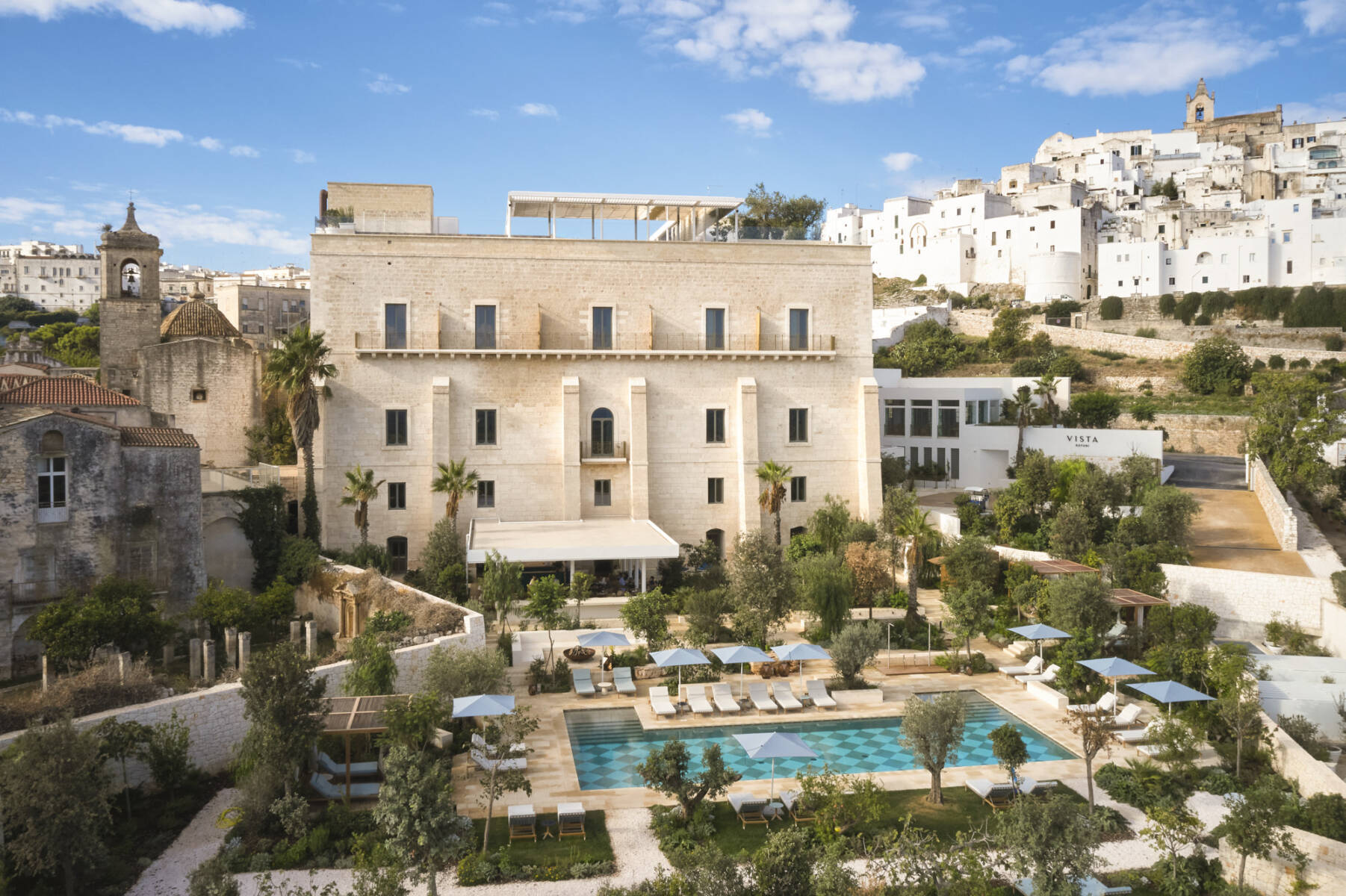
The newest name here, opened in 2025 at the foot of the White City, and the one with the strangest backstory: before it was a hotel, the building was a convent, then a shelter for orphaned girls, then a 1920s cigarette factory. Something genuinely old rather than faked. The Passera family's Vista group restored it conservatively with six thousand square meters of stone vaults and cloister, Grottaglie tiles, and a Michelin name in the kitchen. New and polished, but earned.
Property DNA
Ownership | Vista Collection (Passera family); opened 2025. |
Era & design | A much-layered building (convent → shelter → 1920s tobacco factory), conservatively restored. |
Setting | At the foot of Ostuni's old town, over the olive groves. |
Rooms | 28 (19 suites), under ecclesiastical cross-vaults. |
Designers & makers | Architect Roberto Murgia (RMA); Grottaglie ceramics; landscape by Erik Dhont. |
Read the full profile: Vista Ostuni →
5. Masseria San Michele
Location: Martina Franca
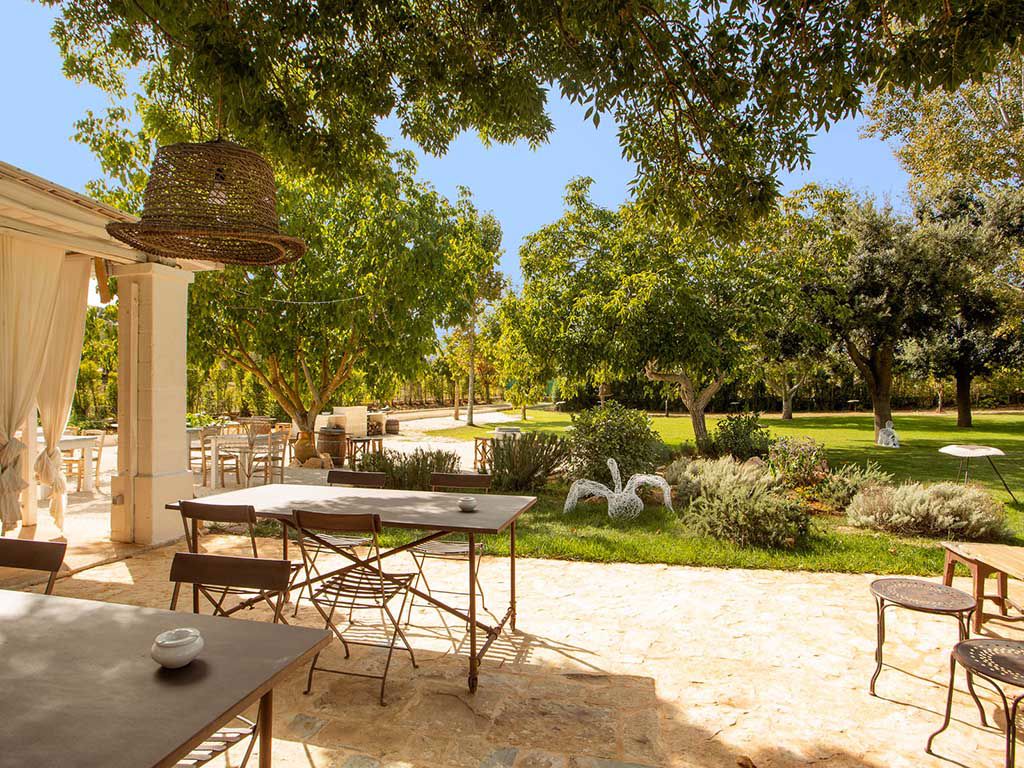
After years in fashion between Milan and Shanghai, Lorenzo Antonacci came home to the Valle d'Itria and rebuilt his family's 18th-century farmhouse by hand out of its own salvaged stone, with floors of cocciopesto and light fixtures made from old olive-press mats. Seven rooms, no outside designer, no famous chef, and that restraint is the appeal: a small, quiet house that kept its working past in plain sight.
Property DNA
Ownership | Independent; owner-restored by Lorenzo Antonacci. |
Era & design | An 18th-century masseria, a three-year conservative restoration finished 2017. |
Setting | Countryside outside Martina Franca, deep in the Valle d'Itria. |
Rooms | Seven, one a family suite. |
Designers & makers | Antonacci's own hand; salvaged local materials (cocciopesto, reclaimed stone). |
Read the full profile: Masseria San Michele →
6. Macienda Guadalupe
Location: Ostuni
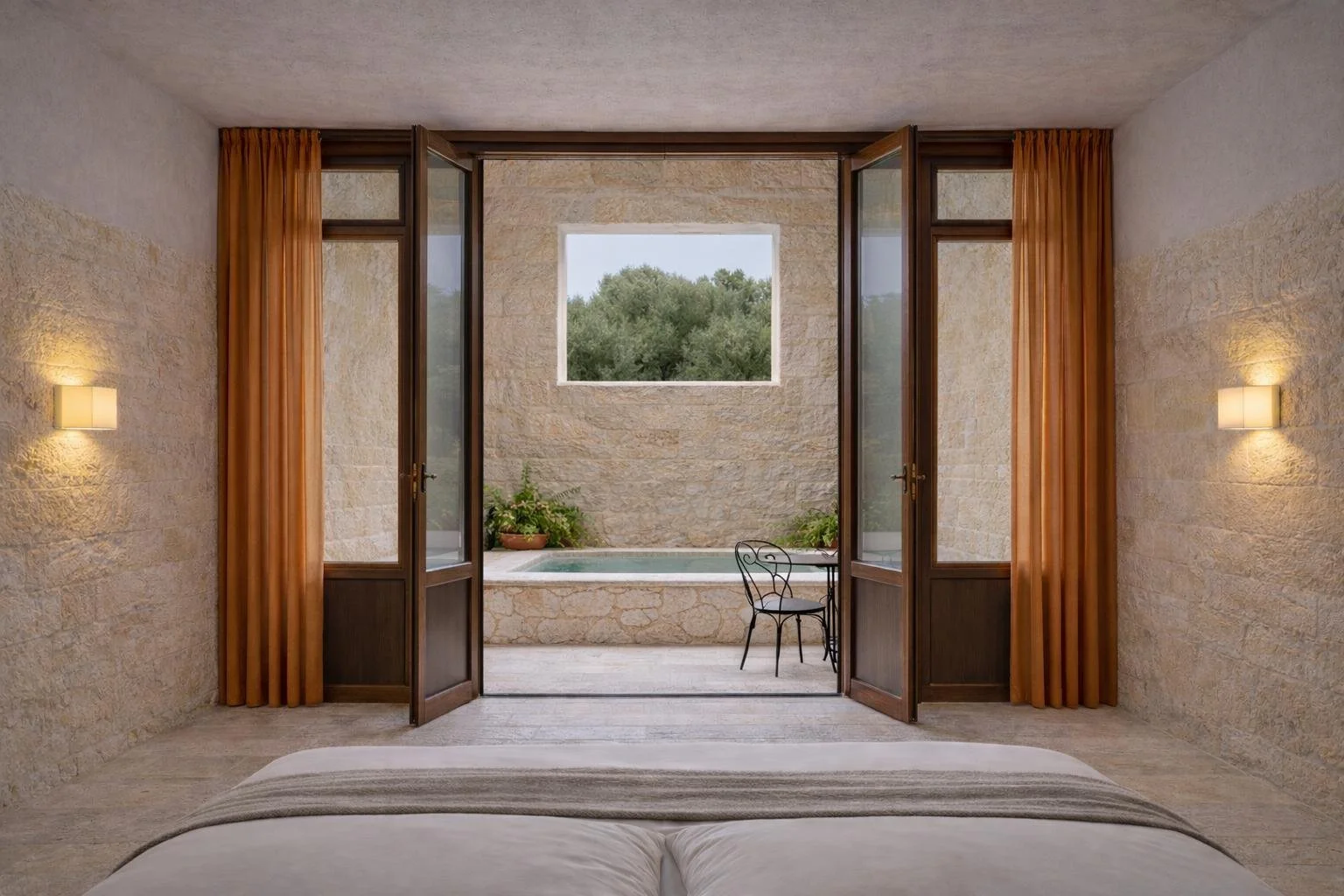
The most idiosyncratic place in this guide, and one of the most on our wavelength: the Mexican designer Jennifer Andreu turned a 1926 farmhouse outside Ostuni into the first Mexican masseria in Italy. Told to paint the old walls a fashionable white, she left them as they were and laid local stone instead, then filled the house with Oaxacan alebrijes and Jalisco leatherwork against bare Apulian stone. She and her partner live upstairs; it reads less like a hotel than like being taken in by interesting friends.
Property DNA
Ownership | Independent, owner-occupied; created by Jennifer Andreu (opened 2025). |
Era & design | A 1926 farmhouse restored into a Mexican-Pugliese "hacienda-masseria," distressed walls kept. |
Setting | The countryside outside Ostuni; a seven-hectare olive estate. |
Rooms | Ten suites, each named for a Mexican place. |
Designers & makers | Jennifer Andreu; Mexican craft (equipales, alebrijes) on local chianconi stone. |
Read the full profile: Macienda Guadalupe →
Region 2
Salento (6 hotels)
The deep south: Lecce's golden baroque, two coastlines, the wine country, and the land's end where the seas meet. (See: The Salento.)
7. Palazzo Daniele
Location: Gagliano del Capo

Most Puglian luxury asks you to leave the world behind a gate; Palazzo Daniele does the opposite, standing on the main square of a working Salento town. An 1861 aristocratic palazzo restored by the Milanese designers Palomba Serafini on a single idea — absence — it's nine stripped-back suites where frescoes and mosaic floors carry the room, and a kitchen run by four local women under the house line, "This house is not a hotel." Our anchor for the south.
Property DNA
Ownership | Independent; GS Collection (Gabriele Salini). |
Era & design | 1861 palazzo; opened 2019; interiors by Studio Palomba Serafini; concept "absence." |
Setting | On the central square of Gagliano del Capo, near the tip of the Salento. |
Rooms | Nine suites. |
Designers & makers | Studio Palomba Serafini; a kitchen of four local Salentine women. |
Honors | AHEAD Europe 2019: Hotel of the Year & Best Guest Room. |
Read the full profile: Palazzo Daniele →
8. Convento di Santa Maria di Costantinopoli
Location: Marittima di Diso
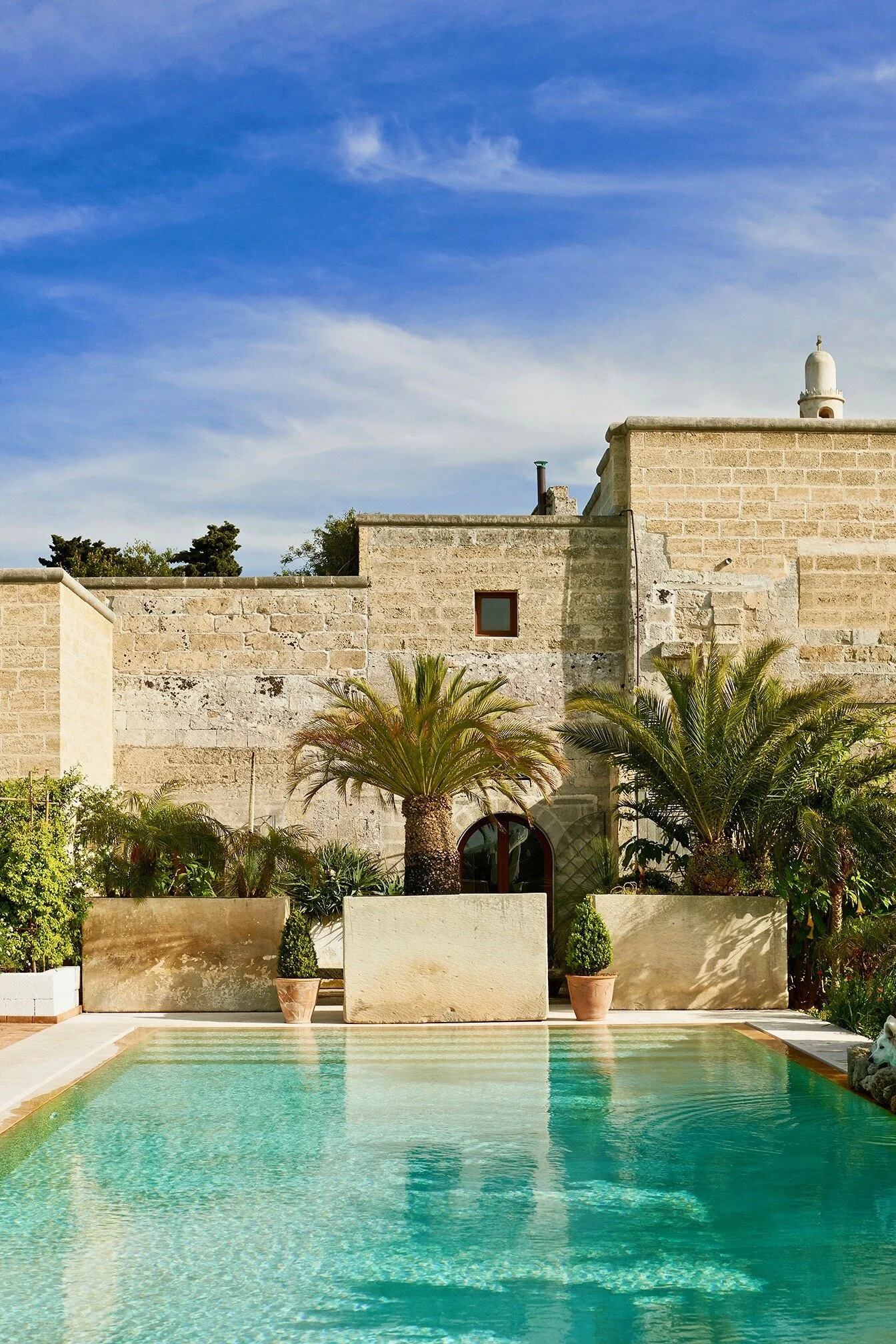
There's no sign on the door. Behind it, a roughly 500-year-old former monastery that the late Lord McAlpine (Thatcher's party treasurer turned aesthete) and his wife Athena filled with the folk art of four continents and some fourteen tons of books, then ran with no front desk, no televisions, and a single long table for dinner. Eight rooms, gloriously unfinished, the most eccentric stay in Puglia and possibly the one most after our own heart.
Property DNA
Ownership | Independent; GS Collection (Gabriele Salini). |
Era & design | 1861 palazzo; opened 2019; interiors by Studio Palomba Serafini; concept "absence." |
Setting | On the central square of Gagliano del Capo, near the tip of the Salento. |
Rooms | Nine suites. |
Designers & makers | Studio Palomba Serafini; a kitchen of four local Salentine women. |
Read the full profile: Convento di Santa Maria di Costantinopoli →
9. La Fiermontina
Location: Lecca
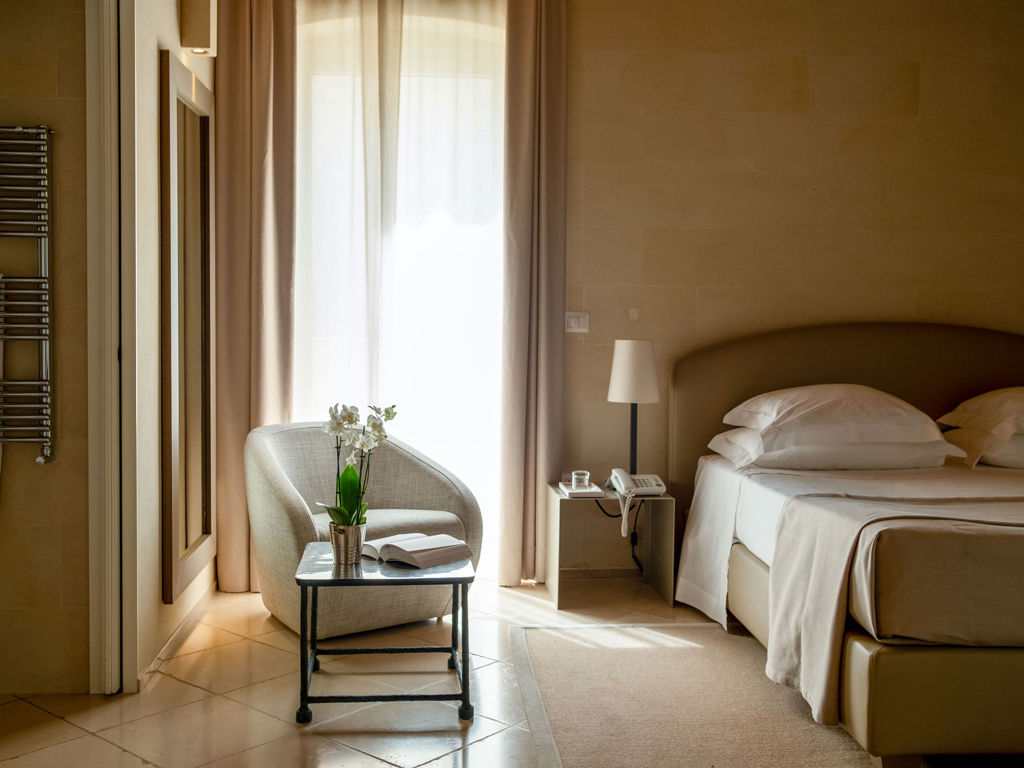
Lecce's marquee design hotel, and for once the hype is right, though not for the reason you'd guess. It's a love letter: built by Giacomo Fiermonte as a tribute to his grandmother Antonia and the two sculptors who loved her, whose work stands all through the house. Add vintage Charlotte Perriand and a walled garden of century-old olives rare inside the old town, and you have real substance under the gloss.
Property DNA
Ownership | Independent, family-run (the Fiermonte family). |
Era & design | A 17th-century Lecce residence rebuilt as a modern masseria by architect Antonio Annicchiarico. |
Setting | Inside Lecce's old town, around a private walled garden + pool. |
Rooms | 19 (+ four Fiermonte Museum suites). |
Designers & makers | Annicchiarico; sculptures by Letourneur & Zwobada; Perriand pieces. |
Honors | Michelin One Key. |
Read the full profile: La Fiermontina →
10. Masseria Trapaná
Location: Surbo
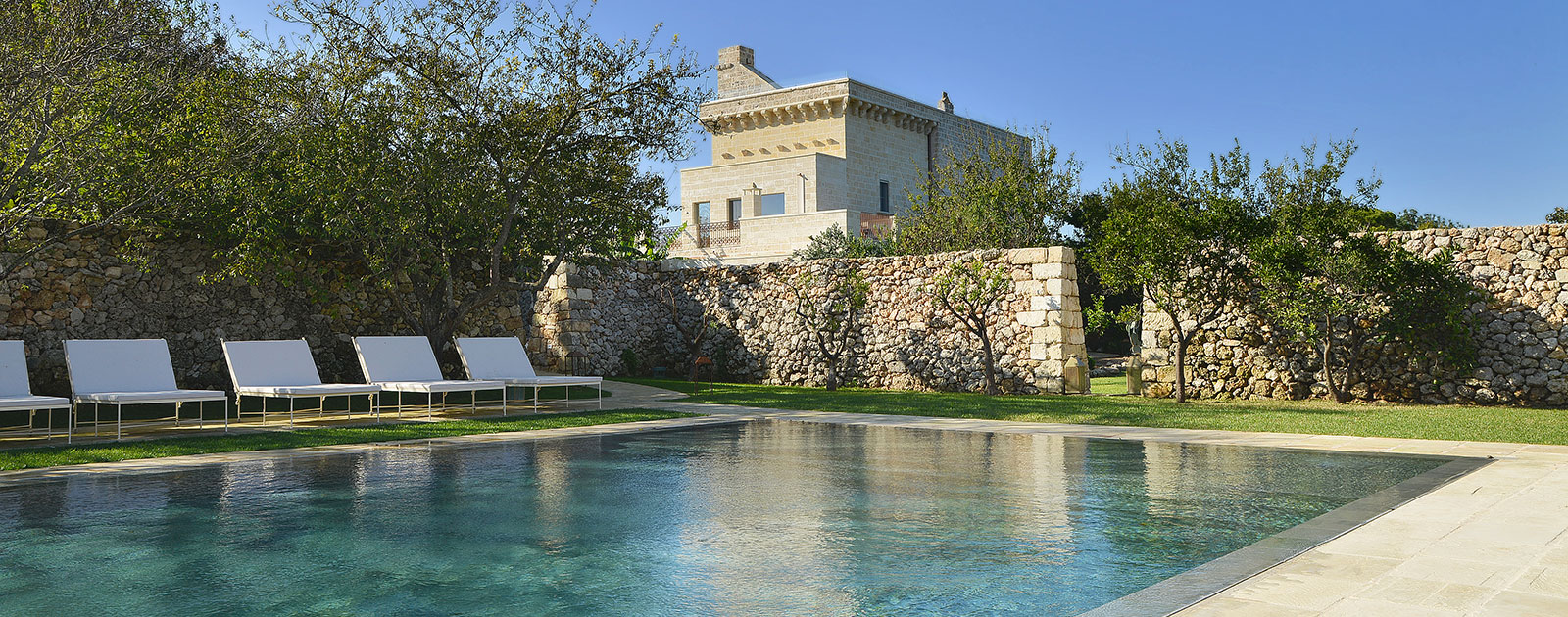
Some masserie are restored; this one was rescued. The Australian hotelier Rob Potter-Sanders found a late-16th-century farm that had sat untouched for a hundred years and spent two rebuilding it by hand. Cast-iron beds forged by the local blacksmith, a frescoed Renaissance chapel, a spa carved from the old olive mill, ten rooms among six walled gardens. The quietest of the Salento stays, and one of the loveliest.
Property DNA
Ownership | Independent; GS Collection (Gabriele Salini). |
Era & design | 1861 palazzo; opened 2019; interiors by Studio Palomba Serafini; concept "absence." |
Setting | On the central square of Gagliano del Capo, near the tip of the Salento. |
Rooms | Nine suites. |
Designers & makers | Studio Palomba Serafini; a kitchen of four local Salentine women. |
Read the full profile: Masseria Trapaná →
11. Tenuta Negroamaro
Location: Sannicola
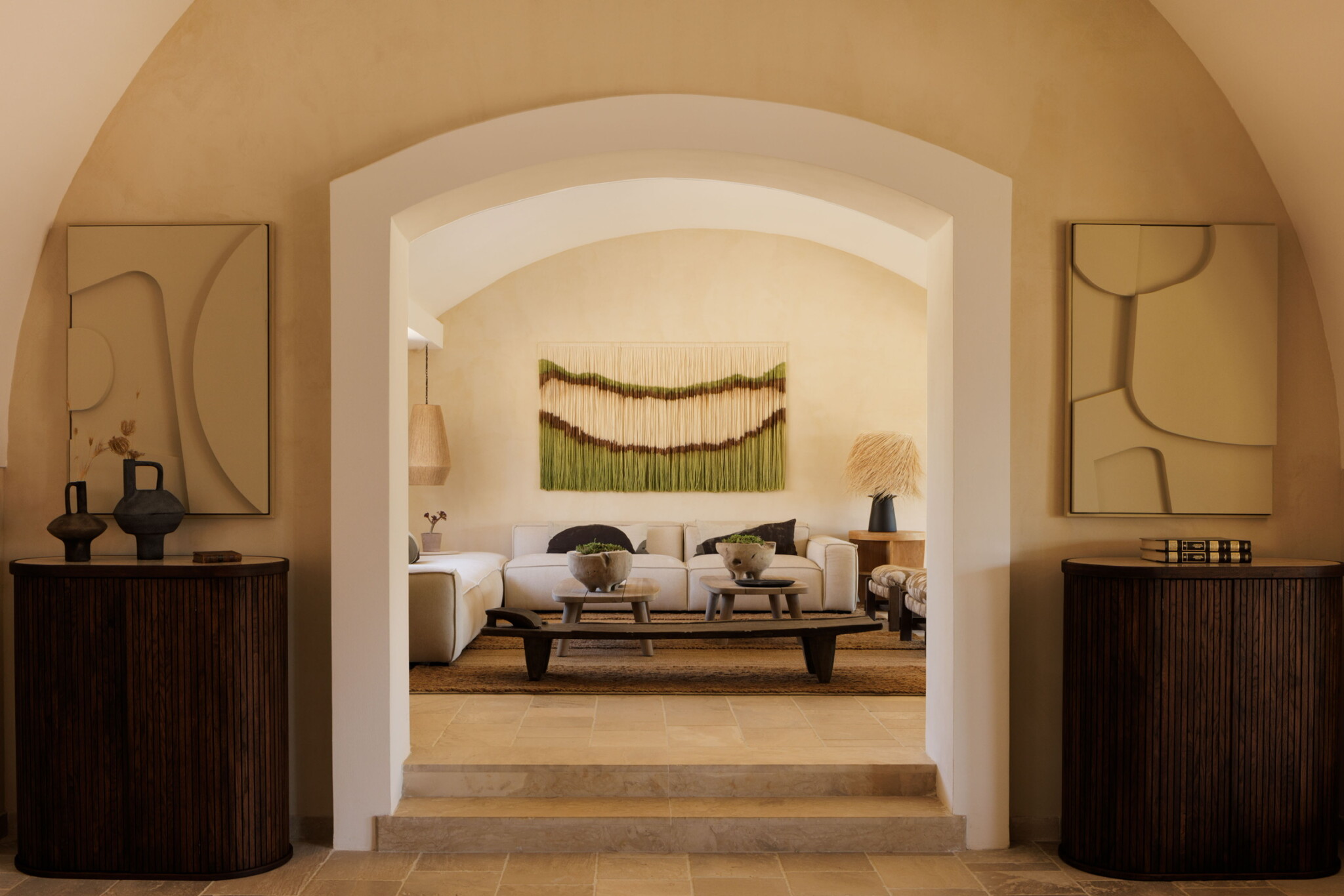
The discreet one. Its owner, Puglia-born, London-based, stays deliberately out of the frame, and the house runs on a single instruction: no shoes, no news. Ten suites by the London designer Olga Ashby, built around the existing olive and cactus rather than over them, with the estate's own Negroamaro in the glass. It doesn't trade on a grand date or a noble name; it trades on calm.
Property DNA
Ownership | Independent; GS Collection (Gabriele Salini). |
Era & design | 1861 palazzo; opened 2019; interiors by Studio Palomba Serafini; concept "absence." |
Setting | On the central square of Gagliano del Capo, near the tip of the Salento. |
Rooms | Nine suites. |
Designers & makers | Studio Palomba Serafini; a kitchen of four local Salentine women. |
Read the full profile: Tenuta Negroamaro →
12. Masseria Potenti
Location: Manduria
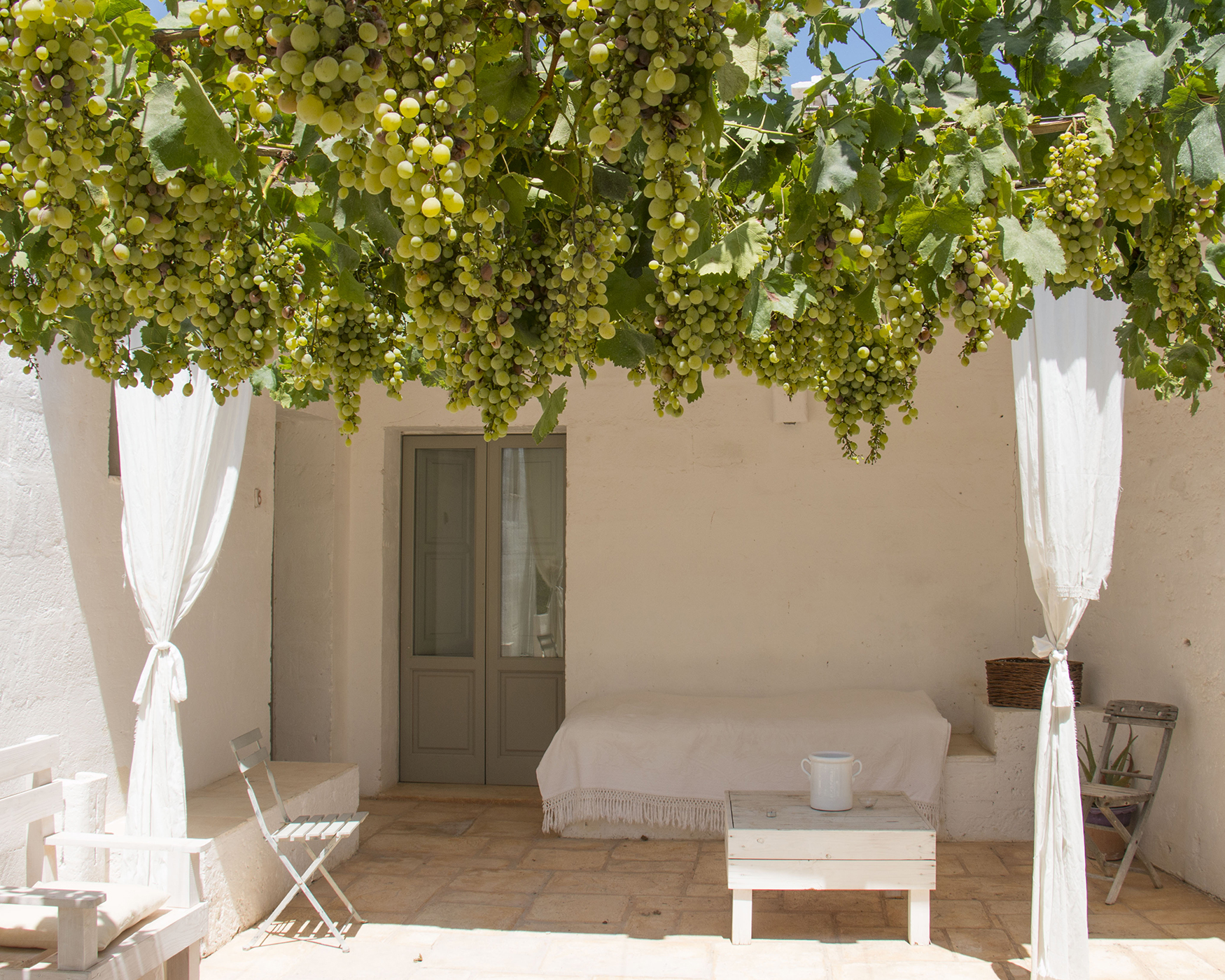
At Masseria Potenti the owner does the cooking. Maria Grazia Di Lauro runs this 16th-century farm near Manduria with her family. She sets the daily menu from the garden, bakes the bread, and styles the long communal table that guests photograph before they sit. Twenty rooms in old farm buildings, the estate's own Primitivo in the glass, and now and then a band playing pizzica. Not branded luxury, and all the better for it.
Property DNA
Ownership | Family-owned and run by Maria Grazia Di Lauro and family; open since 2010. |
Era & design | A 16th-century masseria, once the Imperiali family's. |
Setting | Manduria countryside, primitivo vineyards, near the Ionian dune beaches. |
Rooms | 20 keys (18 rooms + 2 apartments). |
Designers & makers | Maria Grazia's own hand; estate Primitivo and oil. |
Honor | CN Traveler Gold List 2018. |